
Ever wonder why everyone suddenly wants the same trainers, or... Meer weergeven
 Economics1 weergaven·Bijgewerkt Jun 9, 2026·5 pagina's
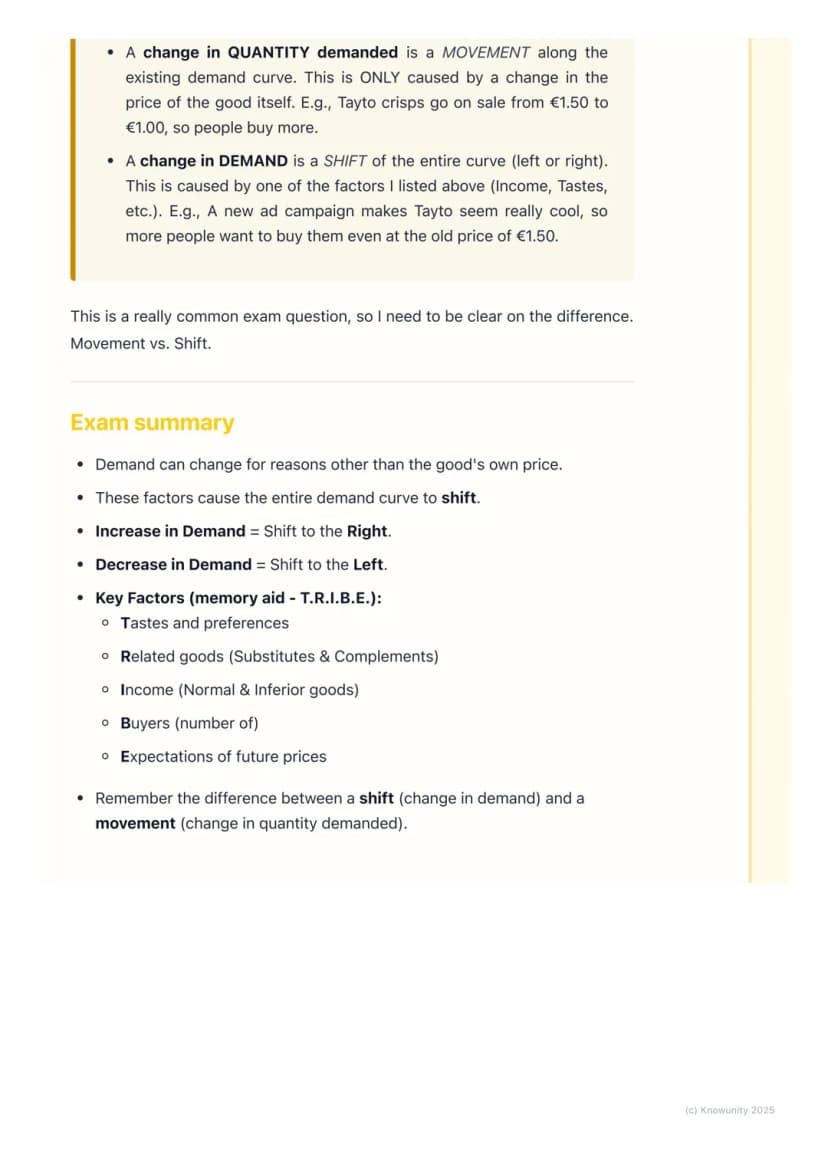
Key Factors Influencing Consumer Demand
1 / 5
1
of 5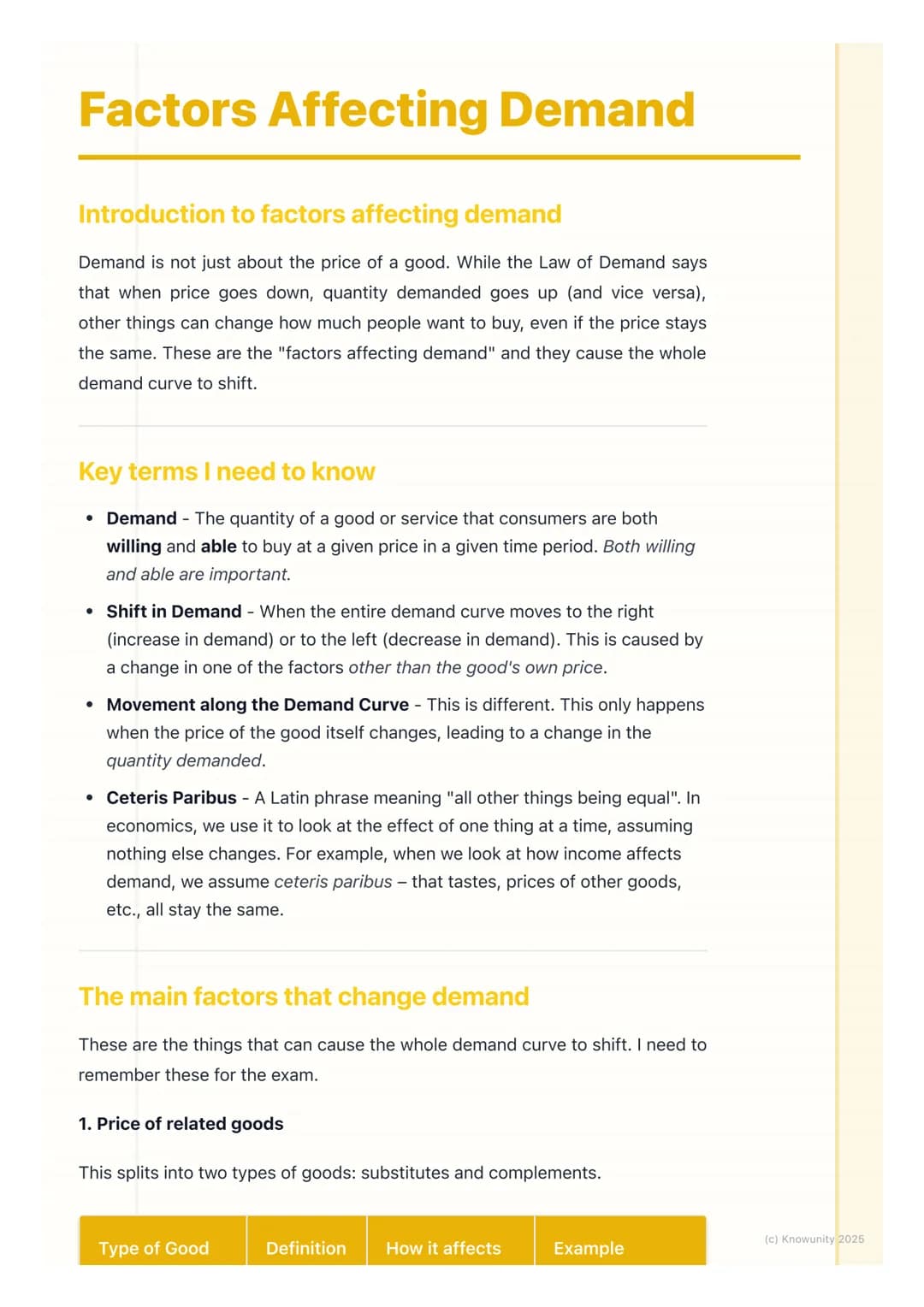
Understanding Demand Basics
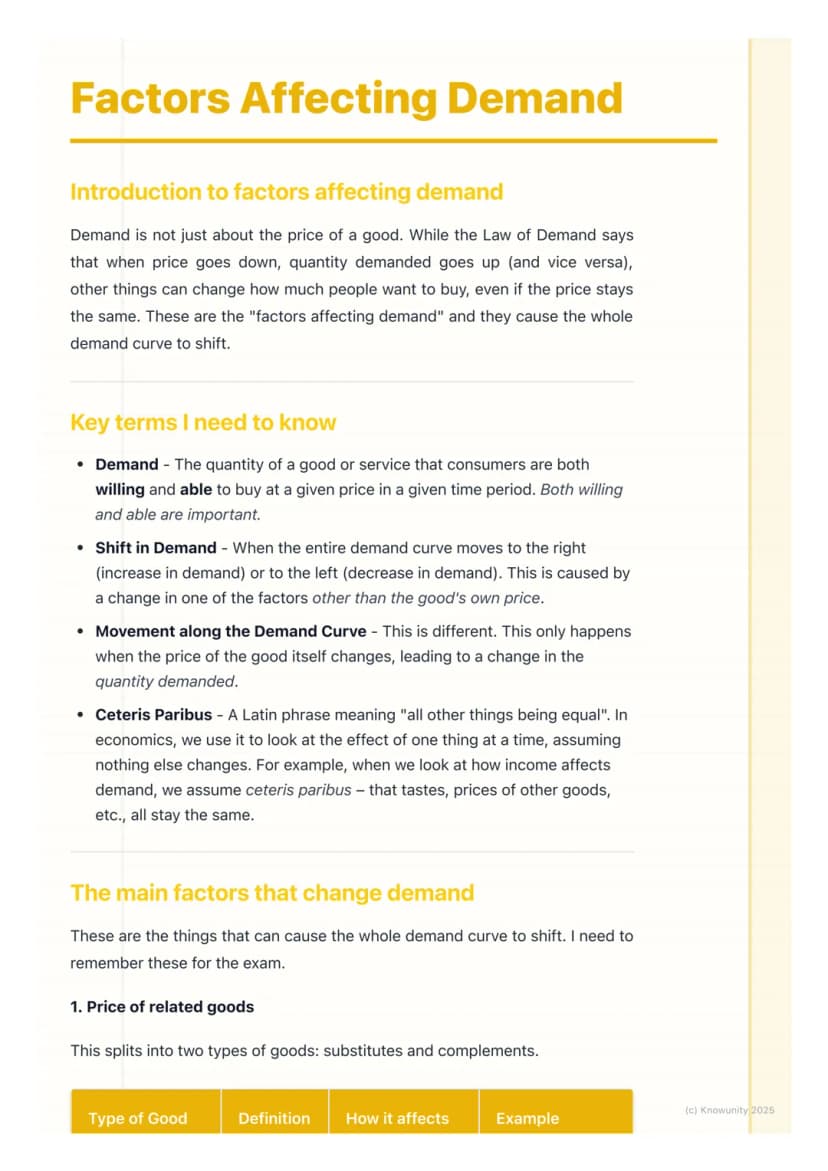
Demand isn't just about price - it's about how willing and able people are to buy something at a given price. Think of it like this: you might want the latest iPhone, but if you can't afford it, there's no actual demand from you.
The Law of Demand tells us that when prices drop, people generally buy more (and vice versa). But here's where it gets interesting - sometimes demand changes even when the price stays exactly the same.
When something other than price affects how much people want to buy, the entire demand curve shifts. This is completely different from just moving along the curve when price changes. Understanding this difference will save you marks in exams!
Key Tip: Remember ceteris paribus - "all other things being equal". Economists use this to study one factor at a time, assuming everything else stays constant.
2
of 5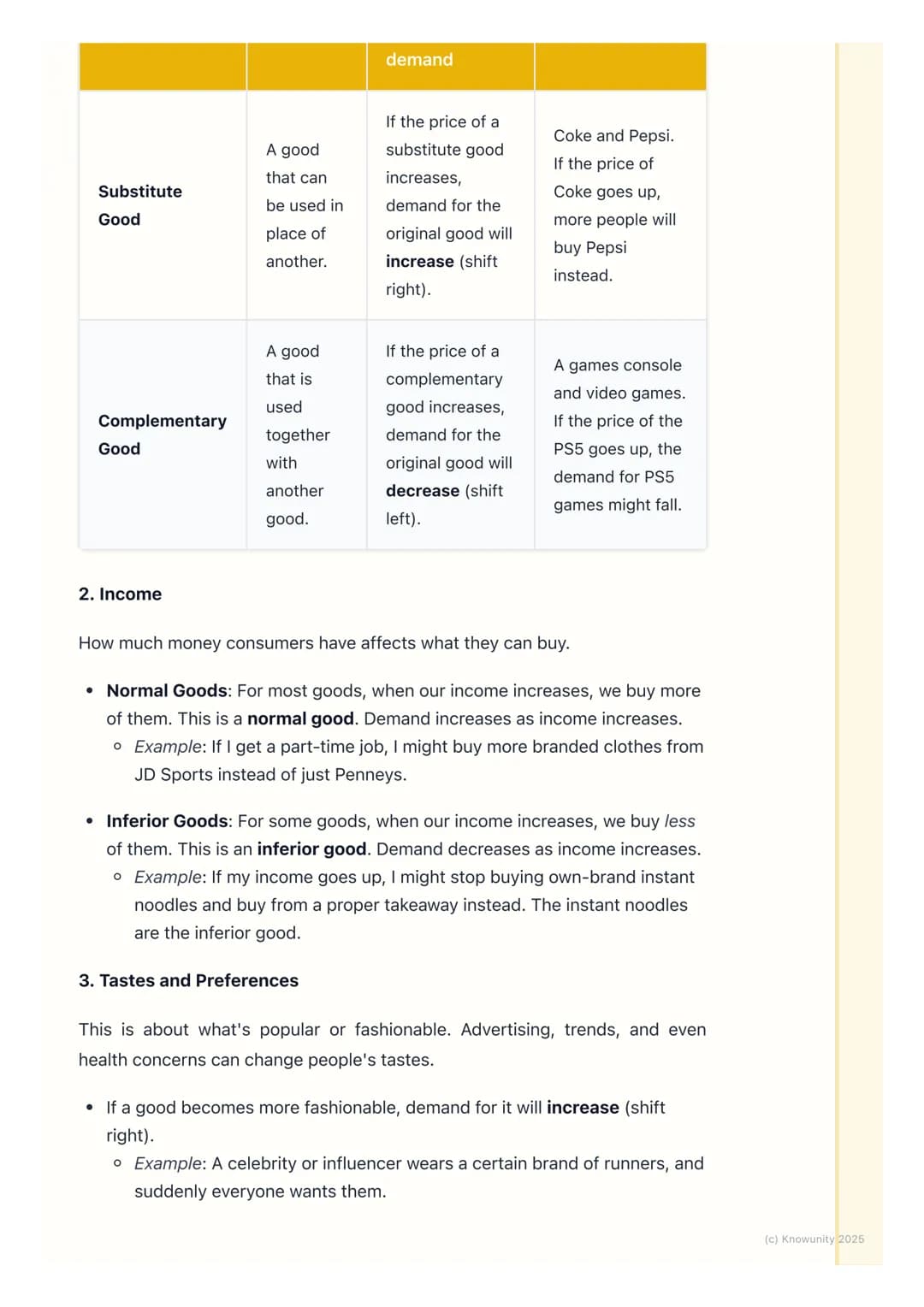
Related Goods: Substitutes and Complements
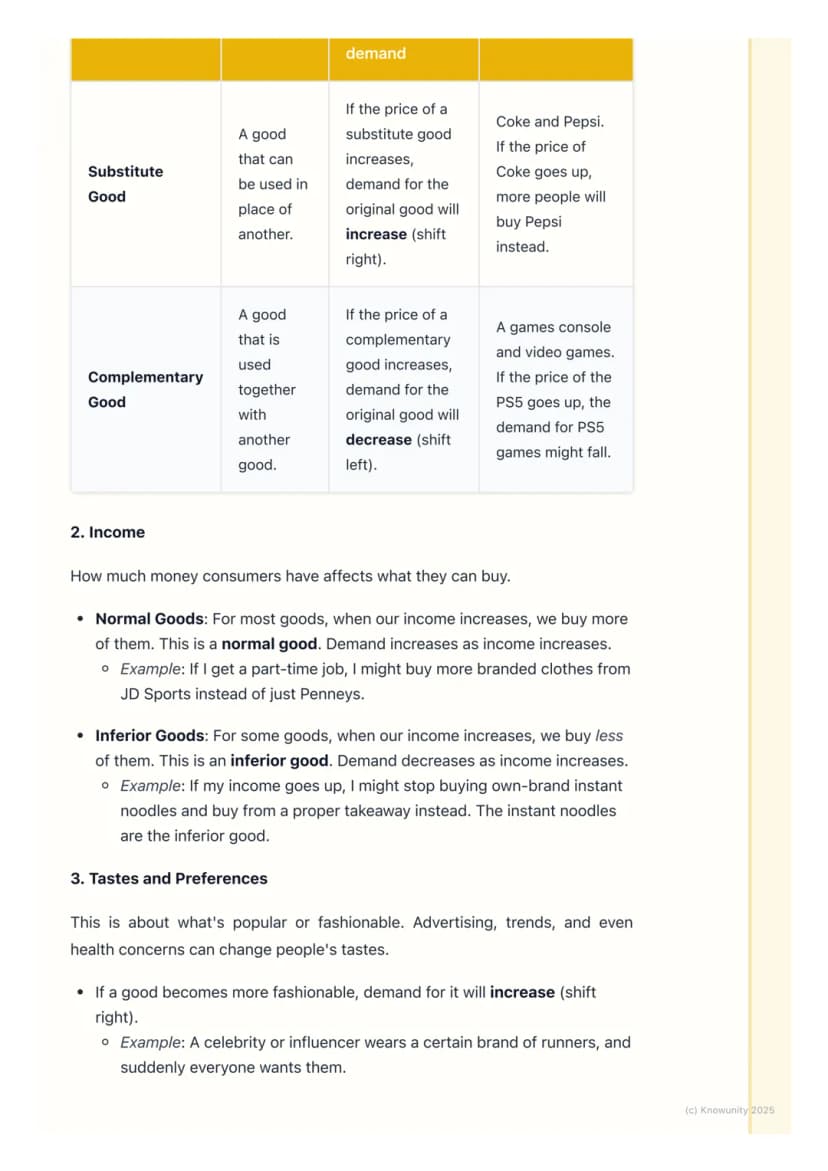
Substitute goods can replace each other - like Coke and Pepsi, or Netflix and Disney+. When Coke's price jumps up, suddenly Pepsi looks more attractive, so demand for Pepsi increases even though its price hasn't changed.
Complementary goods work together - think gaming consoles and games, or cars and petrol. If PlayStation 5 prices soar, fewer people buy the console, which means fewer people need PS5 games. So demand for games drops too.
This is dead useful for understanding real-world scenarios. When petrol prices spike, demand for fuel-efficient cars goes up whilst demand for gas-guzzling SUVs falls.
Quick Check: If two goods are substitutes and one gets more expensive, demand for the other increases. If they're complements and one gets pricier, demand for the other decreases.
3
of 5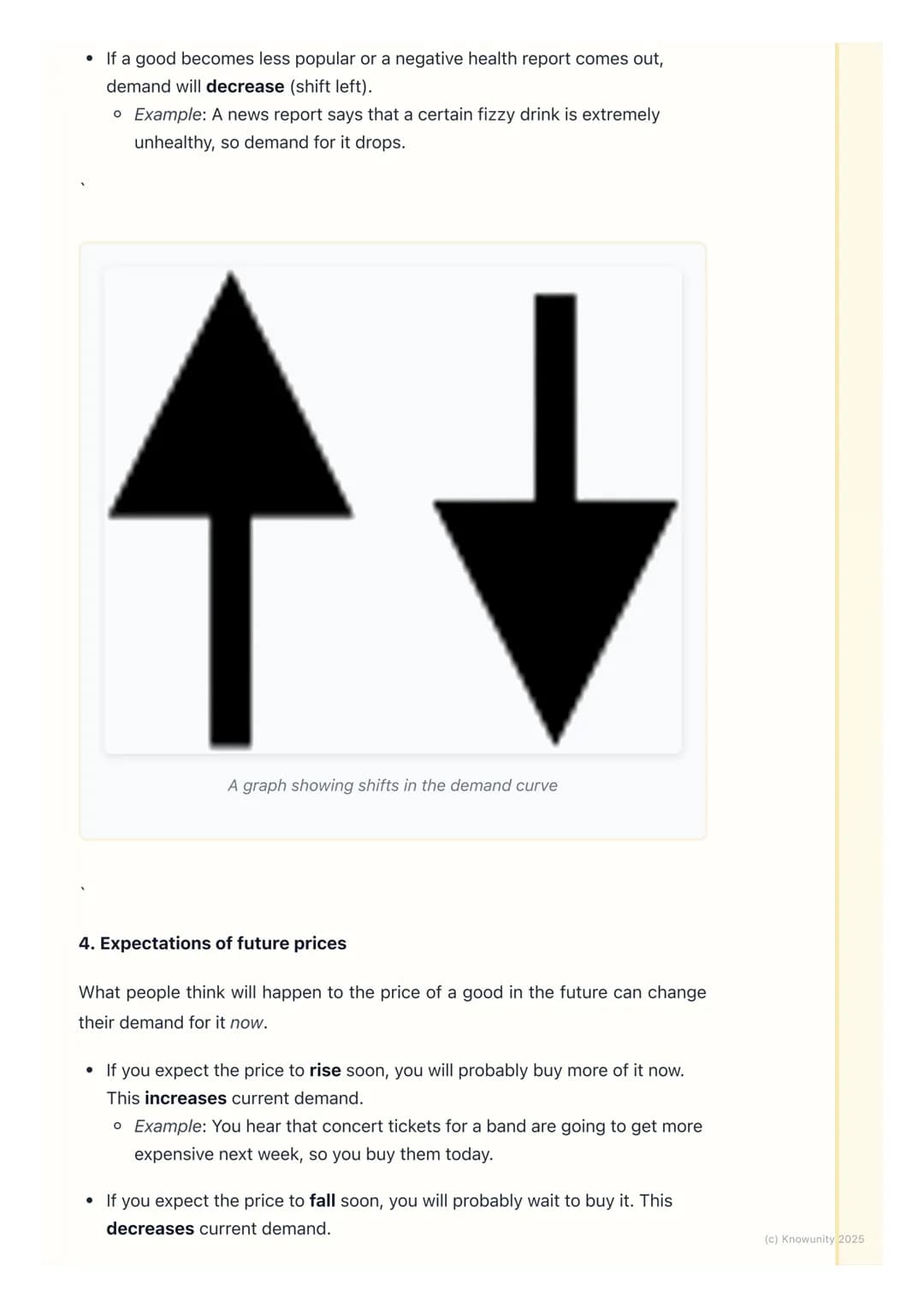
Income Effects: Normal vs Inferior Goods
Your income massively affects what you buy, but not all goods react the same way. Normal goods are things you buy more of when you get richer - branded clothes, restaurant meals, or the latest tech.
Inferior goods work backwards - when your income rises, you actually buy less of them. Think own-brand instant noodles or second-hand clothes. Once you can afford better alternatives, you ditch the cheap stuff.
This explains why Penneys might see less demand during economic booms whilst Brown Thomas sees more. People trade up when they've got extra cash flowing in.
Real Example: Getting a part-time job means you might stop buying supermarket own-brand everything and start choosing branded products instead.
4
of 5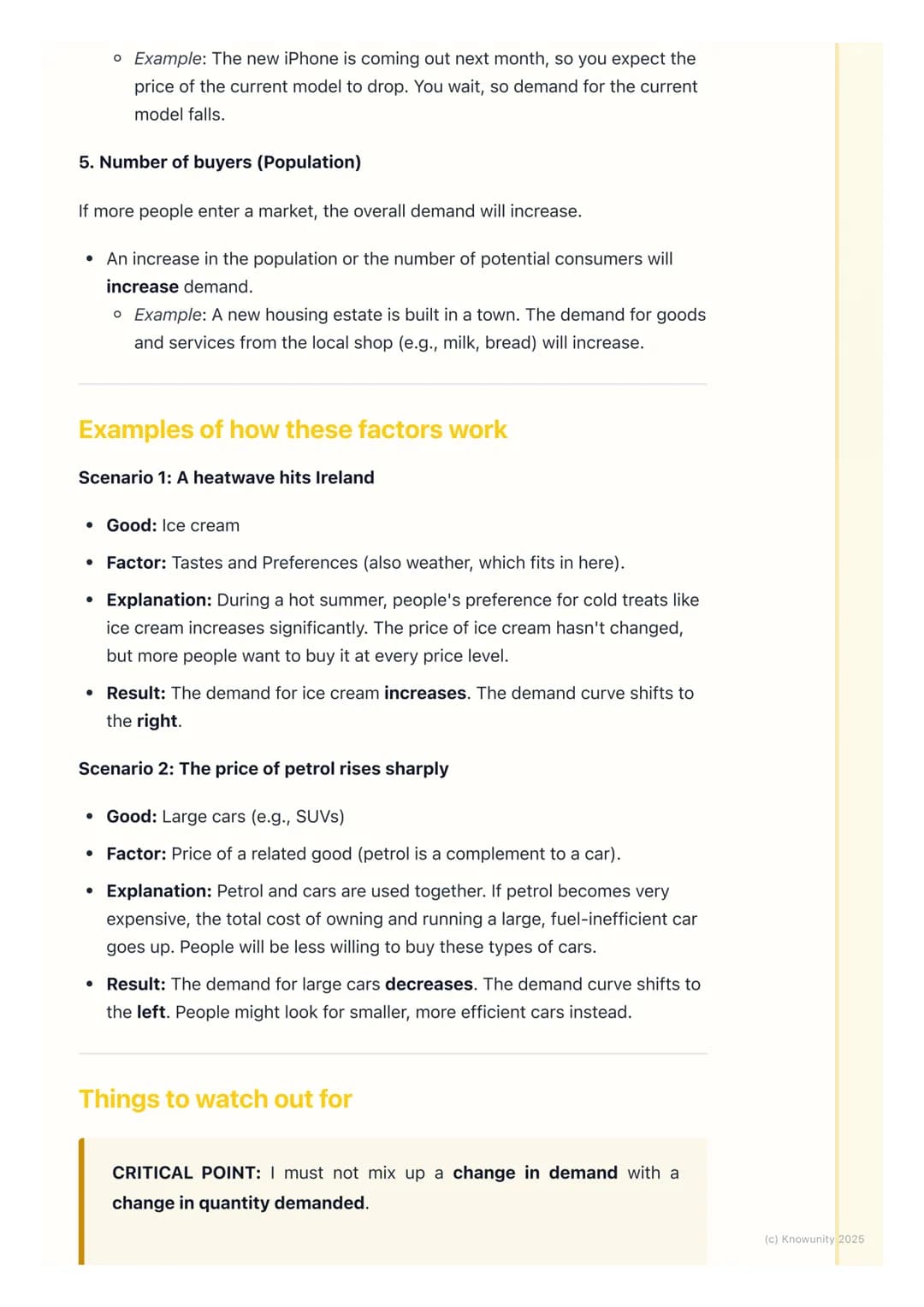
Tastes, Expectations, and Population Changes
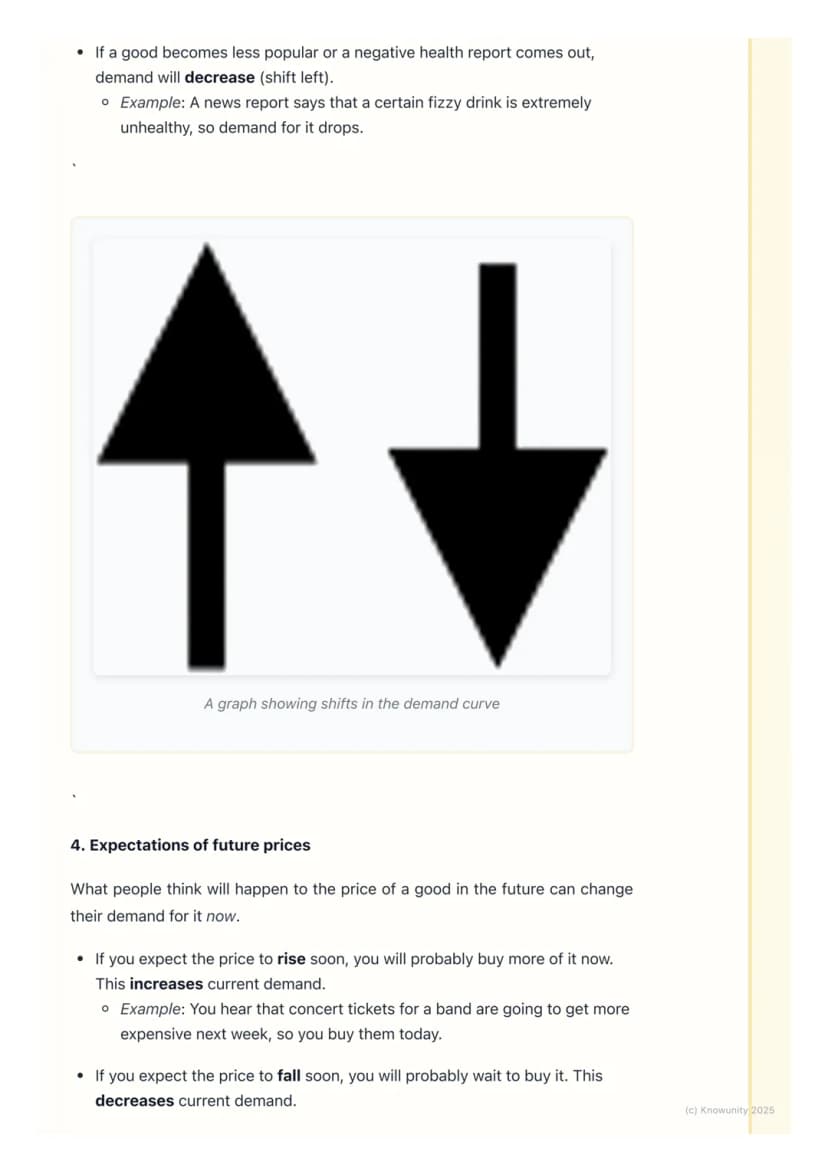
Tastes and preferences drive massive demand shifts. One TikTok trend can make certain trainers explode in popularity overnight. Celebrity endorsements, health scares, or just changing fashions all shift demand curves dramatically.
Future price expectations create interesting behaviour. If you think concert tickets will cost more next week, you'll buy them now - increasing current demand. But if you expect phone prices to drop when the new model launches, you'll wait.
Population changes are straightforward but powerful. More people in an area means higher demand for local services. New housing estates boost demand for everything from groceries to hairdressers.
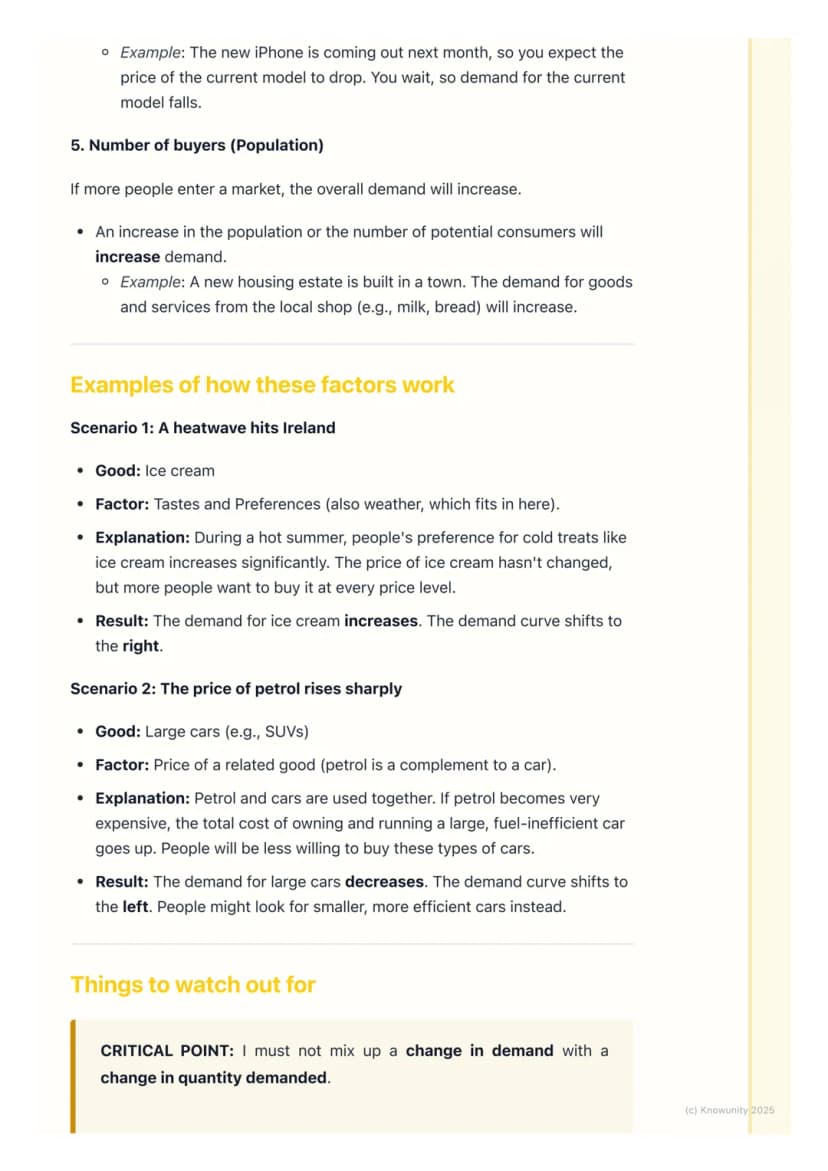
Exam Alert: Don't confuse a movement along the demand curve (price change only) with a shift of the entire curve (caused by these factors).
5
of 5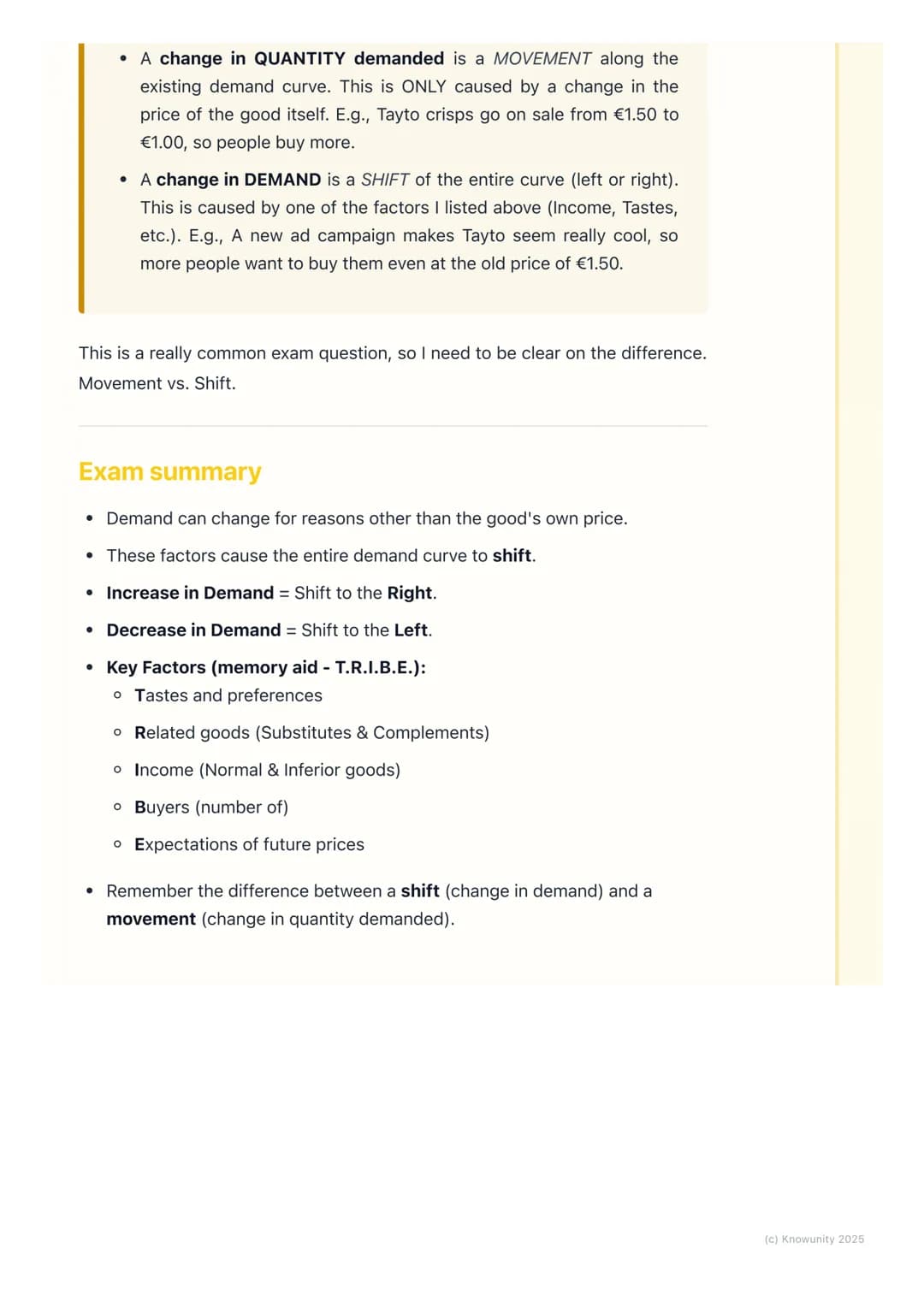
Putting It All Together
Here's your memory aid for exam success: T.R.I.B.E covers the main demand shifters - Tastes, Related goods, Income, Buyers (population), and Expectations of future prices.
Rightward shifts mean increased demand (more people want the good at every price level). Leftward shifts mean decreased demand (fewer people want it at every price level). The price itself hasn't changed - something else has influenced consumer behaviour.
Master the difference between demand changes and quantity demanded changes. This distinction appears in virtually every economics exam and catches loads of students out.
Exam Success: Practice identifying whether scenarios cause movements along the curve (price changes) or shifts of the entire curve (other factors). This skill will boost your marks significantly.
We dachten al dat je dit zou vragen...
Wat is de Knowunity AI companion?
Onze AI Companion is een studentgerichte AI-tool die meer biedt dan alleen antwoorden. Gebouwd op miljoenen Knowunity bronnen, biedt het relevante informatie, gepersonaliseerde studieplannen, quizzes en inhoud direct in de chat, aangepast aan jouw individuele leertraject.
Waar kan ik de Knowunity-app downloaden?
Je kunt de app downloaden via Google Play Store en Apple App Store.
Is Knowunity echt gratis?
Dat klopt! Geniet van gratis toegang tot leerinhoud, maak contact met medestudenten en krijg directe hulp – alles binnen handbereik.
Populairste studiemateriaal
9Kan je niet vinden wat je zoekt? Ontdek andere vakken.
Studenten zijn dol op ons — en jij ook.
4.6/5App Store
4.7/5Google Play
De app is heel makkelijk te gebruiken en goed ontworpen. Ik heb tot nu toe alles kunnen vinden waar ik naar zocht en heb veel kunnen leren van de presentaties! Ik ga de app zeker gebruiken voor een schoolopdracht! En natuurlijk helpt het ook veel als inspiratie.
Stefan SiOS gebruiker
Deze app is echt geweldig. Er zijn zoveel aantekeningen en hulpmiddelen [...]. Mijn probleemvak is bijvoorbeeld Frans, en de app heeft zoveel opties voor hulp. Dankzij deze app ben ik beter geworden in Frans. Ik zou het iedereen aanraden.
Samantha KlichAndroid gebruiker
Wow, ik ben echt onder de indruk. Ik probeerde de app gewoon omdat ik hem vaak geadverteerd had gezien en was absoluut verbaasd. Deze app is DE HULP die je wilt voor school en bovenal biedt hij zoveel dingen, zoals oefeningen en factsheets, die mij persoonlijk HEEL erg hebben geholpen.
AnnaiOS gebruiker
Economics1 weergaven·Bijgewerkt Jun 9, 2026·5 pagina'sKey Factors Influencing Consumer Demand
Ever wonder why everyone suddenly wants the same trainers, or why nobody buys certain sweets anymore? It's not just about price - loads of other factors can change how much people want to buy something. Understanding these demand shifters is... Meer weergeven
1
of 5Meld je aan om de inhoud te zien. Het is gratis!
- Toegang tot alle documenten
- Verbeter je cijfers
- Sluit je aan bij miljoenen studenten
Understanding Demand Basics
Demand isn't just about price - it's about how willing and able people are to buy something at a given price. Think of it like this: you might want the latest iPhone, but if you can't afford it, there's no actual demand from you.
The Law of Demand tells us that when prices drop, people generally buy more (and vice versa). But here's where it gets interesting - sometimes demand changes even when the price stays exactly the same.
When something other than price affects how much people want to buy, the entire demand curve shifts. This is completely different from just moving along the curve when price changes. Understanding this difference will save you marks in exams!
Key Tip: Remember ceteris paribus - "all other things being equal". Economists use this to study one factor at a time, assuming everything else stays constant.
2
of 5Meld je aan om de inhoud te zien. Het is gratis!
- Toegang tot alle documenten
- Verbeter je cijfers
- Sluit je aan bij miljoenen studenten
Related Goods: Substitutes and Complements
Substitute goods can replace each other - like Coke and Pepsi, or Netflix and Disney+. When Coke's price jumps up, suddenly Pepsi looks more attractive, so demand for Pepsi increases even though its price hasn't changed.
Complementary goods work together - think gaming consoles and games, or cars and petrol. If PlayStation 5 prices soar, fewer people buy the console, which means fewer people need PS5 games. So demand for games drops too.
This is dead useful for understanding real-world scenarios. When petrol prices spike, demand for fuel-efficient cars goes up whilst demand for gas-guzzling SUVs falls.
Quick Check: If two goods are substitutes and one gets more expensive, demand for the other increases. If they're complements and one gets pricier, demand for the other decreases.
3
of 5Meld je aan om de inhoud te zien. Het is gratis!
- Toegang tot alle documenten
- Verbeter je cijfers
- Sluit je aan bij miljoenen studenten
Income Effects: Normal vs Inferior Goods
Your income massively affects what you buy, but not all goods react the same way. Normal goods are things you buy more of when you get richer - branded clothes, restaurant meals, or the latest tech.
Inferior goods work backwards - when your income rises, you actually buy less of them. Think own-brand instant noodles or second-hand clothes. Once you can afford better alternatives, you ditch the cheap stuff.
This explains why Penneys might see less demand during economic booms whilst Brown Thomas sees more. People trade up when they've got extra cash flowing in.
Real Example: Getting a part-time job means you might stop buying supermarket own-brand everything and start choosing branded products instead.
4
of 5Meld je aan om de inhoud te zien. Het is gratis!
- Toegang tot alle documenten
- Verbeter je cijfers
- Sluit je aan bij miljoenen studenten
Tastes, Expectations, and Population Changes
Tastes and preferences drive massive demand shifts. One TikTok trend can make certain trainers explode in popularity overnight. Celebrity endorsements, health scares, or just changing fashions all shift demand curves dramatically.
Future price expectations create interesting behaviour. If you think concert tickets will cost more next week, you'll buy them now - increasing current demand. But if you expect phone prices to drop when the new model launches, you'll wait.
Population changes are straightforward but powerful. More people in an area means higher demand for local services. New housing estates boost demand for everything from groceries to hairdressers.
Exam Alert: Don't confuse a movement along the demand curve (price change only) with a shift of the entire curve (caused by these factors).
5
of 5Meld je aan om de inhoud te zien. Het is gratis!
- Toegang tot alle documenten
- Verbeter je cijfers
- Sluit je aan bij miljoenen studenten
Putting It All Together
Here's your memory aid for exam success: T.R.I.B.E covers the main demand shifters - Tastes, Related goods, Income, Buyers (population), and Expectations of future prices.
Rightward shifts mean increased demand (more people want the good at every price level). Leftward shifts mean decreased demand (fewer people want it at every price level). The price itself hasn't changed - something else has influenced consumer behaviour.
Master the difference between demand changes and quantity demanded changes. This distinction appears in virtually every economics exam and catches loads of students out.
Exam Success: Practice identifying whether scenarios cause movements along the curve (price changes) or shifts of the entire curve (other factors). This skill will boost your marks significantly.
We dachten al dat je dit zou vragen...
Wat is de Knowunity AI companion?
Onze AI Companion is een studentgerichte AI-tool die meer biedt dan alleen antwoorden. Gebouwd op miljoenen Knowunity bronnen, biedt het relevante informatie, gepersonaliseerde studieplannen, quizzes en inhoud direct in de chat, aangepast aan jouw individuele leertraject.
Waar kan ik de Knowunity-app downloaden?
Je kunt de app downloaden via Google Play Store en Apple App Store.
Is Knowunity echt gratis?
Dat klopt! Geniet van gratis toegang tot leerinhoud, maak contact met medestudenten en krijg directe hulp – alles binnen handbereik.
Populairste studiemateriaal
9Kan je niet vinden wat je zoekt? Ontdek andere vakken.
Studenten zijn dol op ons — en jij ook.
4.6/5App Store
4.7/5Google Play
De app is heel makkelijk te gebruiken en goed ontworpen. Ik heb tot nu toe alles kunnen vinden waar ik naar zocht en heb veel kunnen leren van de presentaties! Ik ga de app zeker gebruiken voor een schoolopdracht! En natuurlijk helpt het ook veel als inspiratie.
Stefan SiOS gebruiker
Deze app is echt geweldig. Er zijn zoveel aantekeningen en hulpmiddelen [...]. Mijn probleemvak is bijvoorbeeld Frans, en de app heeft zoveel opties voor hulp. Dankzij deze app ben ik beter geworden in Frans. Ik zou het iedereen aanraden.
Samantha KlichAndroid gebruiker
Wow, ik ben echt onder de indruk. Ik probeerde de app gewoon omdat ik hem vaak geadverteerd had gezien en was absoluut verbaasd. Deze app is DE HULP die je wilt voor school en bovenal biedt hij zoveel dingen, zoals oefeningen en factsheets, die mij persoonlijk HEEL erg hebben geholpen.
AnnaiOS gebruiker